Just a Girl
April 27, 2012
My Path to Publication
hosted by Heidi Ruby Miller
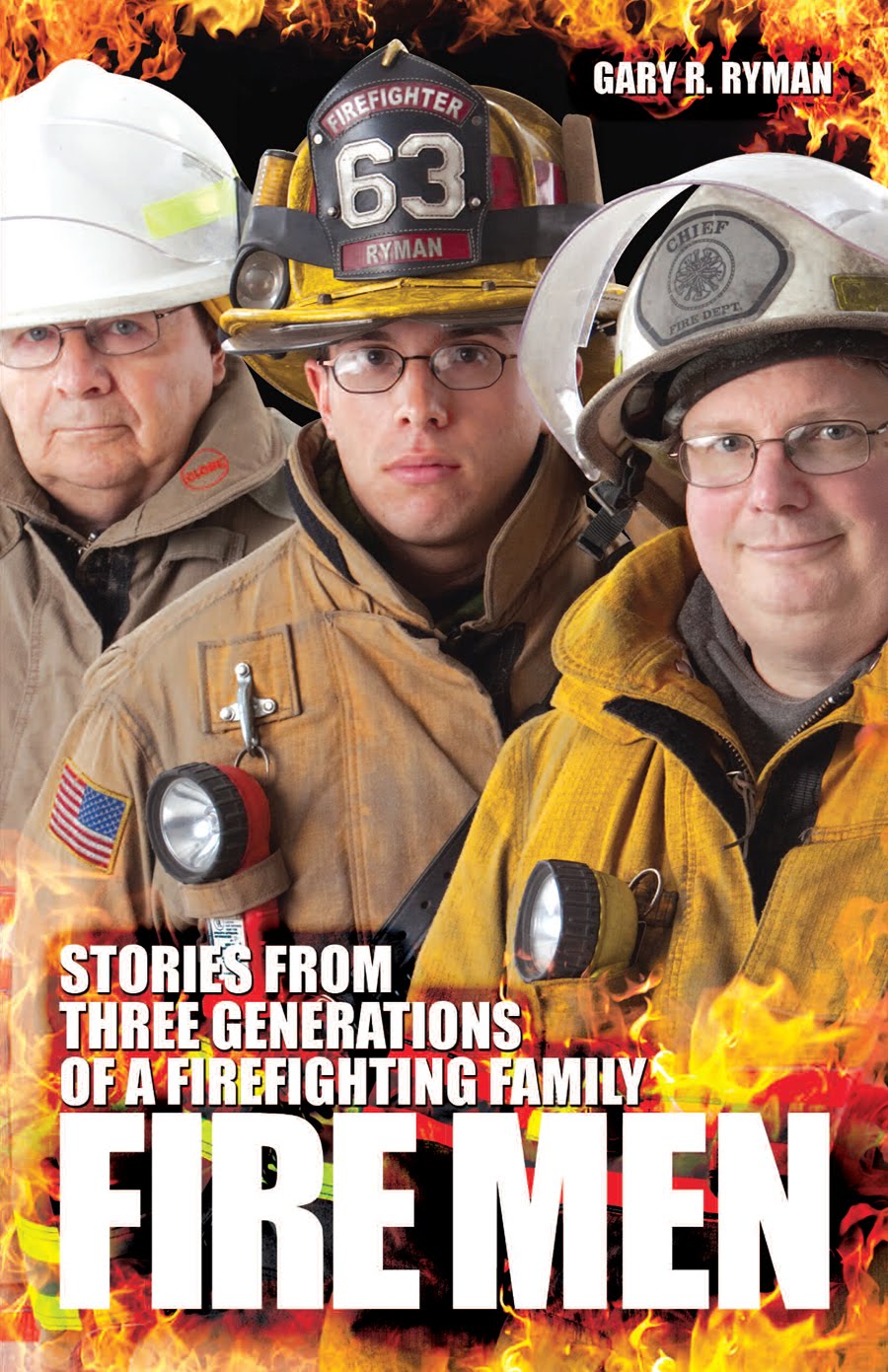
The book Fire Men
started as nothing more than wanting to record some of the experiences
that my father and I had in the fire service and which my son Michael
was starting to have. Writing of one incident often brought back
memories of others and the list of individual stories of calls grew.
After I had a hundred plus pages, it became clear that there was more
than a pile of vignettes—there was a book there trying to get out. The
writing was cathartic as well. It made me smile and laugh and took me
back to less pleasant experiences—some still painful to recall even with
the passage of time.
Eventually, a so-called first draft was complete and some friends
encouraged me to try to obtain an agent and the querying process began.
Lightning struck with surprising quickness and a young agent from a
large New York City firm agreed to work with me. I know now this was an
incredible stroke of luck as the manuscript wasn’t remotely ready. She
provided great feedback and suggestions as I worked my way through a
second draft. This revision much improved the book and she offered more
suggestions to help fine tune the work.
The manuscript was one final pass from the point at which she was
planning to send it to some editors she believed would be interested
when calamity, at least for me, struck hard. My agent accepted a
position as an editor at a big six house, which orphaned me. Yes, she
passed the manuscript to another agent at her firm, but he wasn’t
interested, and so two years after the start, the query roller coaster
began running again. This time I decided to widen my view and include
some of the fine small publishers in the business as well.
After a period of ups and downs with manuscript requests and rejections,
a yes came in the door from a wonderful publisher, Nicole Langan of Tribute Books (www.tribute-books.com).
Her assistance and guidance through the final edits was invaluable.
The cover and artwork she and her staff designed was beyond my wildest
expectations. At the release and continuing now, she has been a great
cheerleader; helping to push the book in conventional and unconventional
ways. With a huge social media presence, she has been a tremendous
teacher in how to use this medium.
Doing events and book signings has resulted in new friends and
opportunities to re-connect with old ones. As much fun as the whole
experience has been, I will never forget holding that first printed copy
in my hand.
--Gary Ryman
April 2012
Gary Ryman is the middle
of three generations of firefighters or the center of the Oreo. His
book Fire Men: Stories from Three Generations of a Firefighting Family
is available on Amazon and Barnes & Noble.com in paperback as well
as in all eBook formats. Visit www.fire-men-book for more information.
Buy Fire Men online at these links:
- http://www.amazon.com/Fire-Men-Stories-Generations-Firefighting/dp/0982256590/ref=tmm_pap_title_0
- http://www.barnesandnoble.com/w/fire-men-gary-r-ryman/1100719030?ean=9780982256596&itm=1&usri=gary+ryman
Friday, April 27, 2012
Wednesday, April 11, 2012
Indian Tanks and the Big Bang

The spring brush fire season, a particularly nasty one this year in northeastern and central Pennsylvania, brings thoughts to one of the most important of “Ryman’s Rules.” It’s actually not a rule—not part of the philosophy of managing firefighters. It is actually a theory or law of physics; something for the Big Bang boys to debate.
The theory or law goes like this: Water weight in an Indian Tank increases one pound per gallon for every year you are over forty.
For more years than I will admit, I have found this to be true, hence my long standing position, both physically and metaphorically, anywhere which does not include the necessity of wearing said Indian Tank.
Let the debate begin…..
Labels:
a family of firefighters,
Brush Fire,
EMS,
fire,
Indian Tank,
NEPA
Sunday, April 1, 2012
Gary Talks Chief Officers at Central PA Bravest
Central PA Bravest
April 1, 2012
A Few Thoughts for the Chief Officer of the Volunteer House
by Gary R. Ryman
There are rules, and then there are rules. Here are some I've tried, not always successfully, to follow.
Ryman’s Rules: A Volunteer Chief’s Philosophy
1. You are responsible. You are responsible 365 days a year, 7 days a week, 24 hours a day. If you are there or 3,000 miles away. You are responsible. You can delegate authority, but not responsibility.
2. The chief is always right. Invite input, debate, etc. from the officers. However, once the decision is made, that’s it. In public, the officers must show solidarity.
3. The officers are always right. If an officer makes a decision you disagree with, in public or with the other firefighters, that decision was right. You talk about what you would have done differently in private.
4. Delegate, delegate, and delegate. You can’t be involved in every activity, nor should you be. Give the junior officers responsibilities and hold them accountable. If they follow through, give them more and more. If they don’t, let them know about it and don’t give them any additional work.
5. Try to develop a command presence. Your presence at an emergency should send a message to the firefighters that everything is going to be okay. Regardless of how badly something is going, try to maintain a calm exterior. Motivate your people. This is done differently for each individual. If you give an order or tell them to get into a building, they should totally believe that you believe they can do it. Never tell a firefighter to do something you wouldn’t or couldn’t do yourself. Chiefs give orders on incomplete information regularly. Even if you have doubts about it, give the order as if you are 100% confident about it. Your confidence is a force multiplier.
6. Let them have fun. Nobody is getting paid for this. The younger guys have to enjoy themselves. At the same time, know when to pull in the reins, and when you do, jerk them hard. They still have to be professionals. You can’t be their buddy anymore. You are the man, and they have to recognize it as such.
7. Pace of change. Keep them sullen but not mutinous. The pace of change has to be fast enough that the young guys see progress, but not so fast that the dinosaurs get riled up. As long as both groups are slightly unhappy, you’re doing fine.
8. Don’t be afraid to piss somebody off. If you’re not pissing somebody off once in a while, you’re not doing your job.
9. Encourage training certifications. Push the guys to get their Firefighter 1 and other certificates. The time is fast coming when what you are able to do, and what positions you can hold in a fire department virtually anywhere will be determined by these certificates. At the same time, work to keep things in perspective. Firefighter 1 or 2 does not equal “super firefighter”.
10. Develop junior officers. The greatest legacy a chief can have is by the officers he leaves behind.
Sunday, March 25, 2012
A Chief's Philosophy
There are rules, and then there are rules. Here are some I've tried, not always successfully, to follow.
Ryman’s Rules: A Volunteer Chief’s Philosophy
1. You are responsible. You are responsible 365 days a year, 7 days a week, 24 hours a day. If you are there or 3,000 miles away. You are responsible. You can delegate authority, but not responsibility.
2. The chief is always right. Invite input, debate, etc. from the officers. However, once the decision is made, that’s it. In public, the officers must show solidarity.
3. The officers are always right. If an officer makes a decision you disagree with, in public or with the other firefighters, that decision was right. You talk about what you would have done differently in private.
4. Delegate, delegate, and delegate. You can’t be involved in every activity, nor should you be. Give the junior officers responsibilities and hold them accountable. If they follow through, give them more and more. If they don’t, let them know about it and don’t give them any additional work.
5. Try to develop a command presence. Your presence at an emergency should send a message to the firefighters that everything is going to be okay. Regardless of how badly something is going, try to maintain a calm exterior. Motivate your people. This is done differently for each individual. If you give an order or tell them to get into a building, they should totally believe that you believe they can do it. Never tell a firefighter to do something you wouldn’t or couldn’t do yourself. Chiefs give orders on incomplete information regularly. Even if you have doubts about it, give the order as if you are 100% confident about it. Your confidence is a force multiplier.
6. Let them have fun. Nobody is getting paid for this. The younger guys have to enjoy themselves. At the same time, know when to pull in the reins, and when you do, jerk them hard. They still have to be professionals. You can’t be their buddy anymore. You are the man, and they have to recognize it as such.
7. Pace of change. Keep them sullen but not mutinous. The pace of change has to be fast enough that the young guys see progress, but not so fast that the dinosaurs get riled up. As long as both groups are slightly unhappy, you’re doing fine.
8. Don’t be afraid to piss somebody off. If you’re not pissing somebody off once in a while, you’re not doing your job.
9. Encourage training certifications. Push the guys to get their Firefighter 1 and other certificates. The time is fast coming when what you are able to do, and what positions you can hold in a fire department virtually anywhere will be determined by these certificates. At the same time, work to keep things in perspective. Firefighter 1 or 2 does not equal “super firefighter”.
10. Develop junior officers. The greatest legacy a chief can have is by the officers he leaves behind.
Labels:
a family of firefighters,
chief,
EMS,
fire,
fire prevention,
rules
Saturday, March 17, 2012
Some Great Comments on "Fire Men"
"A few days ago a friend threw the book FIRE MEN at me. It took just a few days to read this terrific recollection interwoven with a personal physical trauma. I thought it was great!
What is so amazing is how many experiences the Rymans had in structural fire and motor vehicle incidents were ones closely compared to many I've experienced in my 42 years on the job. One of the best was one of the guys trying to "pull" a tongue and groove ceiling. When my hook hit the same in dense smoke it made the same thump. I knew this was different.
I have since thrown the book at other friends in the job to enhance their understanding of this great profession.
Thanks again."
Battalion Chief Harry Cohoon
St. Charles, Missouri
Labels:
a family of firefighters,
EMS,
fire,
fire department,
fire prevention
Friday, March 2, 2012
Gary Talks Grocery Store Fires at Central PA Bravest
Central PA Bravest
March 1, 2012
Grocery Store Fires - Not Just Bread, Butter and Beans
by Gary R. Ryman
Milk, eggs, coffee; the next time you visit the local grocery store, look up from your list at this common occupancy and the fire suppression issues presented. Grocery stores are carrying a wider variety of merchandise in bigger quantities than every before. Beyond food items, there is lighter fluid, motor oil, Styrofoam cups and plates, and other high fire challenge commodities. In larger stores, stock values exceeding ten million dollars are not unusual. Generally in a fully sprinklered grocery store, a fire would be expected to be quickly controlled by sprinklers, usually five heads or less. There are, however, a few areas of these stores which can cause some interesting challenges for firefighters.
Rear stockrooms are becoming smaller and more congested. The trend toward increased sales space and smaller support areas increases the density of storage and fire challenge in these areas, and periods right after a delivery will be the worst. This can make reaching the seat of a stock room fire far more difficult. In addition, it could result in delays in controlling utilities, as electrical panels and access to the switchgear which are typically located here may be obstructed.
The front canopy of many stores appears like an innocuous cover for shopping carts and sale flyers and a place to display a large sign or insignia for the store brand. In many cases, the interior is plywood, resulting in a sizeable combustible concealed space attached to the main store. The strip center stores in which many grocery stores are present, have similarly constructed canopies. Few of these are provided with sprinkler protection. Fires can be ignited by lights, signs, or other electrical ignition sources, and are not uncommon. If there are openings between the rear of the canopy and the main store, fire can and will spread into the main store. Even if cut off by a rated separation, extensive smoke can be expected in areas of the store. Extensive opening up of the canopy front, and from below is critical for water application along with interior crews to check the extension of fire into the store.
Reaching this area inside the store can be difficult, particularly in smoky conditions. Most stores have not easily located stairwells to this level. Offices, break rooms, and similar support areas are usually present along a corridor adjacent to the canopy. Some older stores have walkways or catwalks with observation posts for Security personnel. Others have extensive storage of seasonal displays and similar items, increasing access difficulties. At a minimum, an Engine and Truck company should be assigned to this area and a thermal imaging camera can be invaluable. The on duty store manager can provide timely assistance in locating the stairway, and providing some information on the layout which will be encountered.
As with many public occupancies, search can be challenging. Each aisle should be quickly covered. Don’t forget restrooms; not easily located in many stores, which you know if you’ve ever needed to use one while shopping. Food preparation areas around the perimeter walls such as bakeries, deli, and the like also need to be checked along with the rear stock area.
As in any commercial structure, the sprinkler protection is your best friend. Ensure that one of the first arriving engines ties into the fire department connection to supplement the system. Make sure sprinkler control valves are open and don’t close them prematurely.
Smoke removal by the standard methods is important. Beyond the life safety implications, overall damage can be reduced by prompt ventilation.
If power needs to be cut for an extended period, refrigeration will be down. Salvage covers or tarps over the open case freezers commonly found in stores can help reduce the temperature increases in these units and improve salvage potential.
Grocery store fires can present some interesting challenges. The layout can differ from store to store even within the same chain, so don’t assume one is identical to another. Familiarity increases the likelihood of a safe and successful operation. Pre-incident knowledge of your first due grocery stores can help make a fire there into a bread and butter incident.
Saturday, February 25, 2012
Firefighting Zoology
Mixing animals and firefighters usually results in a memorable incident.
The house was going good with fire in the basement and on the first floor. On the line in the basement, we made quick work of the fire there, much less than on the floor above. Exiting, we dragged the line over to go in and help on the first floor. On of the chiefs tapped me on the shoulder.
“Did you see a snake down there?” That got my attention.
“No, if I had you wouldn’t see me now. What kind of snake?” Snakes are not my favorite creature.
“One of those big fat South American types. Apparently it’s missing from its container.”
The fire instantly became a defensive exterior attack, at least for me. I had no desire to assist the brothers on the first floor any longer. Luckily they had things well under control. Overhaul was out of the question as well, and Rehab was looking good—it was well away from the house. Luckily the owner quickly located the missing reptile, which I learned while contently sipping coffee with the EMS folks.
EMS calls are not exempt. We had just started to examine a man experiencing chest pains when his dog decided to make an appearance. This was not our typical friendly pet lap dog. This was Cujo’s twin; a snapping snarling beast with dog goo dripping from his snout as he growled at us. We backed slowly away, and the animal herded us like the sheep we were away from his owner. Making it through an opening into an adjacent room, we slammed the door and then opened it just a crack to see what was happening. There sat our patient while the $5000 (in those days) Life Pak we had abandoned was being turned into an expensive chew toy. Our dog mace was in its normal spot, secured to the visor in the front of the rig—located on the opposite side of our captor. We had little choice but to wait until the victim’s wife took the now docile mutt from the room. It made us wish for a hand line. As nasty as Cujo looked, there was no way he could’ve swallowed 150 gallons per minute.
Larger animals can be less frightening, but troublesome in different ways. At a silo fire, we needed to get the cows out of the attached barn in case of extension. A slap on the ass got most of them moving, but one was a bit stubborn. Jim and I each took an end—which didn’t matter as there is no really desirable end to a cow—and began pulling and pushing. While you would think two chief officers would be smarter than and able to direct a simple cow, you would be wrong. We had as much influence on the bovine creature as we did over department dinosaurs (another interesting species). Eventually the cow tired of our attempts and decided on her own to join her cohorts in the pasture.
Animals and emergencies—such a fun combination.
Labels:
a family of firefighters,
Cow,
Dog,
EMS,
fire,
fire department,
Snake,
Zoology
Subscribe to:
Posts (Atom)
